
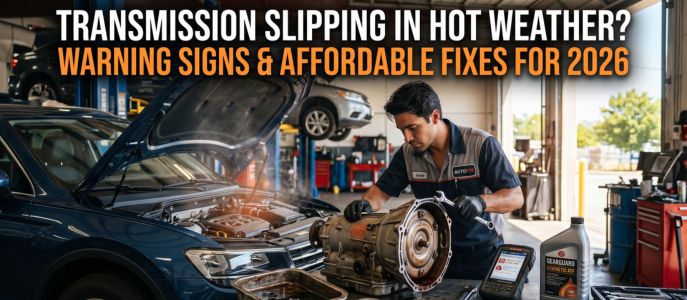
Transmission Slipping in Hot Weather? Warning Signs & Affordable Fixes for 2026
If your vehicle starts hesitating, revving high, or shifting poorly during hot weather, your transmission may be slipping. Summer heat and rising temperatures in 2026 can put extra stress on already worn transmission systems, especially in older vehicles or those with neglected maintenance.
Transmission slipping should never be ignored. What begins as a minor issue can quickly become a major repair bill. The good news is that some causes are affordable to fix if caught early.
In this guide, we’ll explain why transmissions slip more in hot weather, warning signs to watch for, and when used transmissions or quality used transmissions may be the smartest replacement option.
What Is Transmission Slipping?
Transmission slipping happens when your engine revs, but power does not transfer smoothly to the wheels.
Common Examples:
- RPM rises but speed doesn’t increase normally
- Delay when shifting into Drive or Reverse
- Sudden gear changes
- Jerking while accelerating
- Weak hill climbing power
Hot weather often makes these symptoms worse.
Why Heat Causes Transmission Problems
Automatic transmissions rely on fluid pressure, friction materials, and cooling.
High temperatures can cause:
- Thinner or degraded fluid
- Overheating seals
- Reduced hydraulic pressure
- Worn clutch packs slipping more
- Sensor stress
If a transmission is already aging, summer heat often exposes the problem.
Top Warning Signs in Hot Weather
- High RPM Before Shifting: If the engine revs unusually high before changing gears, slipping may be occurring.
- Delayed Engagement: You shift into Drive or Reverse, but the car hesitates before moving.
- Burning Smell: Overheated transmission fluid often smells burnt. This is a major warning sign.
- Loss of Power on Hills: Slipping transmissions struggle more under load.
- Check Engine or Transmission Warning Light: Modern vehicles may detect pressure or shift errors.
- Jerking or Hard Shifts: Some slipping units also shift harshly as they compensate.
Affordable Fixes That May Help Early
If caught early, not every slipping transmission needs full replacement.
1. Transmission Fluid Service
Old or burnt fluid loses effectiveness.
Fresh fluid and filter service may improve shift quality if damage is minor.
2. Cooling System Inspection
Some vehicles use transmission coolers connected to the radiator.
Fixing cooling issues helps reduce heat stress.
3. Sensor or Solenoid Repair
Electronic shift controls can fail and mimic slipping symptoms.
Replacing a faulty solenoid or sensor can be far cheaper than a rebuild.
4. Software Updates / Relearn
Some modern transmissions benefit from adaptive reset or updated programming.
When It’s More Serious
If these symptoms continue after service, internal wear may already be advanced.
Signs:
- Burnt fluid returns quickly
- Slipping in multiple gears
- Loud whining noises
- Metal debris in fluid
- No movement at times
At this point, replacement may be smarter than repeated small repairs.
Why Many Drivers Choose Used Transmissions
A full rebuild or brand-new unit can be expensive. That’s why many owners compare used transmissions.
Benefits:
- Lower cost than new replacement
- OEM factory fitment
- Faster availability for many models
- Practical for older vehicles
Why Quality Used Transmissions Matter
Not all replacements are equal. Choosing quality used transmissions can reduce risk and improve longevity.
Look For:
- Verified mileage
- Tested units
- Clean fluid condition
- Warranty coverage
- Compatibility confirmation
A cheap unknown unit may cost more later.
Should You Repair or Replace?
Repair often makes sense when:
- Problem is fluid-related
- Vehicle has low mileage
- Symptoms started recently
Replacement often makes sense when:
- Severe slipping continues
- Internal damage confirmed
- Rebuild cost exceeds vehicle value
- Car is otherwise in good shape
Mistakes to Avoid
- Driving for months with slipping symptoms
- Towing heavy loads in extreme heat
- Ignoring burnt smell
- Choosing cheapest replacement without testing
- Skipping cooler or fluid checks after install
Hot Weather Prevention Tips for 2026
- Service transmission on schedule
- Avoid aggressive driving in heat
- Check cooling system health
- Use correct fluid type
- Fix small shift issues early
Final Thoughts
Transmission slipping in hot weather is often a warning that heat is exposing existing wear or fluid problems. If caught early, a service, sensor repair, or cooling fix may solve it affordably.
If internal damage is advanced, many drivers save money by choosing used transmissions or carefully sourced quality used transmissions instead of paying for a costly rebuild.
Act early, diagnose properly, and protect your vehicle before a minor slip becomes a major failure.