
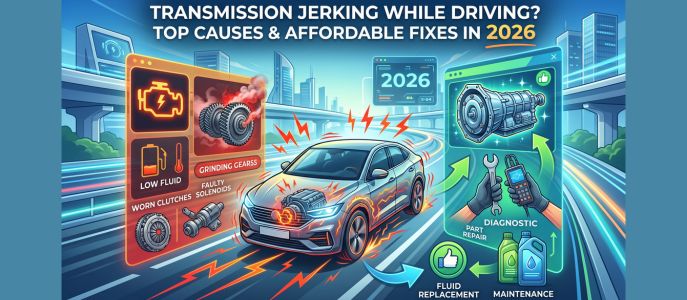
Transmission Jerking While Driving? Top Causes & Affordable Fixes in 2026
If your car jerks while shifting, hesitates during acceleration, or feels like it suddenly grabs gears, the transmission may be warning you about a developing problem. In 2026, transmission jerking remains one of the most common complaints among drivers-especially in aging vehicles with higher mileage.
The good news is that not every jerking issue means total transmission failure. Many causes are repairable if diagnosed early. In more serious cases, replacing the unit with used transmissions can be far more affordable than buying a new gearbox.
In this guide, we’ll explain the top causes of transmission jerking and when quality used transmissions may be the smart solution.
What Does Transmission Jerking Feel Like?
Drivers describe jerking in several ways:
- Hard shift between gears
- Sudden lurch while accelerating
- Delay followed by harsh engagement
- Shaking during gear changes
- Clunk when shifting into Drive or Reverse
- Surging at low speed
These symptoms can come from fluid issues, electronics, or internal wear.
Top Causes of Transmission Jerking
1. Low or Dirty Transmission Fluid
This is one of the most common causes.
Transmission fluid provides:
- Hydraulic pressure
- Lubrication
- Cooling
- Smooth shifting
Signs:
- Dark or burnt fluid
- Delayed shifts
- Harsh gear changes
Affordable Fix:
Fluid service or filter replacement if caught early.
2. Worn Transmission Mounts
Bad mounts allow excess movement, which feels like jerking.
Signs:
- Thump when shifting
- Vibration at idle
- Movement under acceleration
Fix:
Replace worn mounts.
3. Faulty Shift Solenoids
Modern automatics rely on electronic solenoids to control shifts.
Symptoms:
- Random harsh shifts
- Stuck in one gear
- Check engine light
Fix:
Diagnostic scan and solenoid replacement.
4. Bad Speed Sensors
Transmission computers need speed data.
Symptoms:
- Incorrect shift timing
- Jerking at certain speeds
- Warning lights
Fix:
Replace failed sensors.
5. Engine Misfire Mistaken as Transmission Problem
Sometimes jerking under acceleration is engine-related.
Check For:
- Spark plug wear
- Coil failure
- Fuel delivery issues
Fix:
Engine tune-up may solve the issue completely.
6. Valve Body Problems
The valve body directs hydraulic pressure inside the transmission.
Signs:
- Hard shifts
- Gear hunting
- Inconsistent behavior hot vs cold
Fix:
Repair or replacement depending on damage.
7. Internal Wear or Clutch Damage
Higher-mileage transmissions may develop worn clutches or damaged internal components.
Signs:
- Slipping plus jerking
- Burnt smell
- Metal debris in fluid
- Worsening daily symptoms
At this stage, many owners compare used transmissions versus rebuild costs.
Affordable Fixes to Try First in 2026
Before assuming replacement, start with lower-cost checks:
Basic Steps:
- Scan diagnostic codes
- Check fluid level and condition
- Inspect mounts
- Test battery/charging system
- Update transmission software if applicable
Many shift issues are electronic or maintenance-related.
Warning Signs You Shouldn’t Ignore
Get it checked quickly if you notice:
- Jerking getting worse weekly
- Refusal to shift gears
- Slipping RPMs
- Burning smell
- Fluid leaks
- Dashboard warning lights
Driving too long can turn a repairable issue into full failure.
When Used Transmissions Make Sense
If repair estimates are high, used transmissions can be a cost-saving option.
Best Situations:
- Vehicle is paid off
- Engine runs strong
- Body and suspension are solid
- Rebuild cost too high
- Replacement car would cost more
A tested unit can keep a reliable vehicle on the road.
How to Choose Quality Used Transmissions
Not all replacements are equal. Look for quality used transmissions with:
Important Checks:
- Correct compatibility by VIN/year
- Reasonable mileage
- Warranty coverage
- Tested or inspected condition
- Trusted supplier reputation
Avoid unknown units with no history.
Vehicles Often Worth Saving
Transmission replacement can make sense on:
- Popular sedans
- Reliable SUVs
- Pickup trucks
- Well-maintained family cars
- Vehicles with no rust and good engine health
Pro Tips for Longer Transmission Life
After repair or replacement:
- Service fluid on schedule
- Avoid towing overloads
- Warm up gently in cold weather
- Fix leaks early
- Don’t ignore hard shifts
Mistakes Drivers Make
- Continuing to drive with violent jerking
- Ignoring fluid leaks
- Assuming all jerks mean total failure
- Buying cheapest transmission available
- Skipping diagnostics first
Final Thoughts
Transmission jerking while driving can come from simple issues like dirty fluid, sensors, or mounts-or more serious internal wear. The key in 2026 is diagnosing it early before damage spreads.
If repairs are too expensive, used transmissions may be a practical alternative. Just focus on warranty, fitment, and sourcing quality used transmissions from a reputable supplier.
Act early, and you may save thousands while keeping your vehicle running smoothly.